
From 20 September this year, deeming rates will increase for the first time since the Covid-era freeze. This change may affect people whose payments and benefits are determined by the income test.
The announcement confirms that rates will gradually return to ‘pre-pandemic settings’ with staged increases to take effect in the future. Increases will be realigned from 1 July to the same time that payments are indexed (expected to be 20 March and 20 September).
What are the new rates?
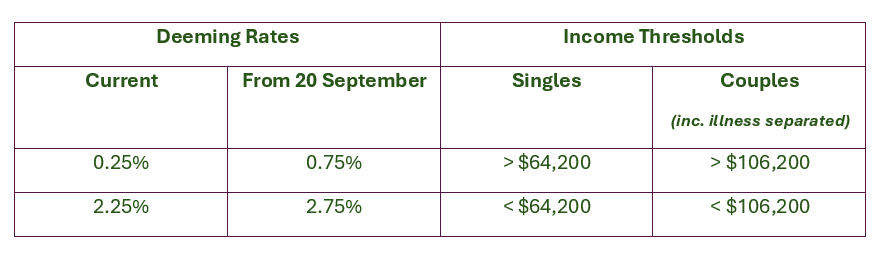
The current and new deeming rates from 20 September 2025 are included in the table below:
Who may be impacted?
An increase in deeming rates could reduce benefits and entitlements for people who are:
- income-tested pension and allowance recipients
- Commonwealth Seniors Health Card (CSHC) holders who have an account-based income stream that is deemed, and
- Low Income Health Care Card holders who may lose entitlement.
Higher deeming rates could also increase aged care fees that are based on means for some aged care clients.